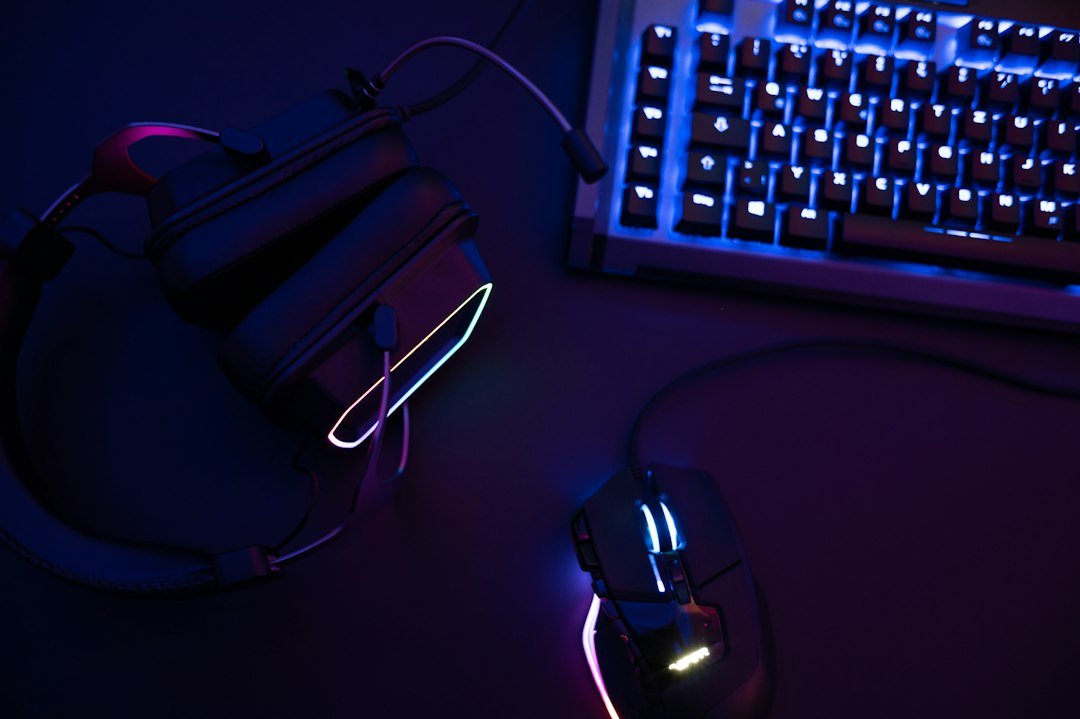
Technology play gaming is the use of modern tools and devices to improve how we play video games. It covers everything from high‑end graphics cards to cloud streaming services, and it’s reshaping the way players experience games today.
Key Takeaways
- Technology play gaming blends hardware, software, and cloud services to create richer game experiences.
- Beginners can start by testing their own hardware with free browser tools like CPS Test.
- Understanding the core tech – graphics, input, and streaming – helps you choose the right gear.
What Technology Play Gaming Means Today
At its core, technology play gaming is about using the latest tech to make games look better, play smoother, and feel more real. The term covers hardware like GPUs, mice, and monitors; software like game engines and drivers; and services such as cloud gaming platforms that let you play high‑end titles on low‑spec devices.
Why It Matters for New Gamers
New players often wonder why some games look better on one computer than another. The answer lies in the tech stack behind the game. Knowing the basics lets you pick a setup that matches your budget and gaming style.
Getting Started: Free Browser Tools to Test Your Setup
Before buying new gear, try free online tools. Gaming Tools Roundup lists utilities like the CPS Test, which measures how many clicks per second you can achieve. These tests give you a baseline so you can track improvements when you upgrade.
Choosing the Right Monitor for Gaming
A monitor’s refresh rate and response time directly affect how smooth a game feels. How to Choose a Gaming Monitor explains the key specs and how to match them to your game genre.
Wireless Gaming Mice: What to Look For
Wireless mice can be just as precise as wired ones if they use the right technology. The Wireless Gaming Mouse guide covers signal types, battery life, and latency – factors that impact your click speed and reaction time.
Cloud Gaming: Playing High‑End Games Anywhere
Cloud services stream games from powerful servers to your device, letting you play titles that would otherwise require expensive hardware. This tech is a cornerstone of technology play gaming because it removes the hardware barrier for many players.
Artificial Intelligence in Gameplay
AI powers smarter non‑player characters, procedural content, and adaptive difficulty. These advancements make games feel more alive and responsive, which is a key benefit of technology play gaming.
What to Do Next
1. Run a free CPS test to see your current click speed.
2. Compare your results to the average for your chosen game genre.
3. If you want smoother gameplay, explore a monitor with at least a 144 Hz refresh rate.

How to Diagnose Input Lag in Software Settings
Before you spend money on new hardware, check your software. Most beginners assume lag means a slow computer, but often it is just a setting in the wrong place. Input lag happens when the time between your physical click and the on-screen action increases. You can fix this in three specific spots: your graphics driver, your operating system, and the game itself.
Adjusting Graphics Driver Settings
Open your NVIDIA Control Panel or AMD Radeon Software. Look for a setting called “Low Latency Mode” or “Frame Write Delay.” Enabling this forces the GPU to process commands immediately rather than batching them for efficiency. It might drop your frame rate by one or two frames, but the responsiveness will feel sharper. If you are playing a competitive shooter, this trade-off is almost always worth it.
- Low Latency Mode: Set to “On” or “Ultra” for competitive titles.
- Power Management: Set to “Prefer Maximum Performance” so the GPU does not downclock when idle.
- Resizable BAR: Enable this if your motherboard and CPU support it. It allows the CPU to access the full GPU memory buffer, reducing stutter.
Windows Game Mode and Background Processes
Windows 10 and 11 have a “Game Mode” that prioritizes your game over background tasks. It is usually on by default, but verify it. More importantly, check your Task Manager. When a game launches, look at the CPU and Disk columns. If a background app like a cloud backup service or antivirus scan spikes disk usage to 100%, your game will stutter. This is not a hardware failure; it is a resource conflict. Close non-essential applications before you start playing.
Wired vs. Wireless: The Latency Myth and Reality
There is a persistent belief that wired connections are always faster and more reliable than wireless. For most modern gaming peripherals, this is no longer true. However, “no lag” does not mean “no interference.” Understanding the difference between latency and reliability helps you choose the right mouse or headset without overspending.
Understanding 1000Hz vs. 4000Hz Polling
Polling rate is how often your computer checks for input from your mouse. A 1000Hz rate checks 1,000 times per second. A 4000Hz rate checks four times as often. If you have a high-refresh-rate monitor (144Hz or higher), a 1000Hz mouse is usually the sweet spot.
Going to 4000Hz requires a very high-end CPU to process the extra data without causing stutter. For most players, a standard 1000Hz wireless mouse performs identically to a wired one. The difference is negligible in actual gameplay.
Interference and Placement
Wireless mice use 2.4GHz radio waves. This frequency is crowded. Wi-Fi routers, USB 3.0 ports, and other wireless devices use the same band. If your mouse stutters, it is likely interference, not battery life.
Move your USB receiver to a different port, preferably one directly connected to the motherboard at the back of your PC, rather than a front-panel hub. Using a USB extension cable to place the receiver away from your power supply and hard drives can eliminate micro-stutters.
If you switch to a 5GHz Wi-Fi network, you reduce the chance of collision with your mouse signal.
Budgeting for Your First Upgrade: Where to Spend
You do not need to replace your entire setup to improve your experience. Beginners often make the mistake of buying an expensive graphics card when their CPU is the bottleneck. Here is a practical way to prioritize your spend based on the type of games you play.
For Competitive Esports
If you play Valorant, CS2, or League of Legends, your priority is frame rate consistency. These games are less demanding on graphics but rely heavily on input processing.
- Monitor: Prioritize a 144Hz or 165Hz panel. Response time matters more than resolution. A 1080p monitor is sufficient and cheaper.
- Mouse: Invest in a lightweight mouse (under 60g). Weight affects fatigue and precision more than sensor DPI.
- Keyboard: A mechanical keyboard with linear switches reduces actuation force, allowing for faster key repeats.
For Single-Player Story Games
If you play Cyberpunk 2077, Baldur’s Gate 3, or Elden Ring, your priority is visual fidelity and stable performance at higher settings.
- Graphics Card: This is your biggest investment. A mid-range GPU from the current generation will handle most titles at 1080p or 1440p with high settings.
- Storage: Use an NVMe SSD for your game library. Loading times drop significantly compared to SATA SSDs or HDDs.
- Audio: A good pair of headphones with spatial audio support enhances immersion more than a high-end monitor upgrade.
Common Budget Mistake: The CPU/GPU Imbalance
Check your built-in performance monitor (using the Performance Overlay in Steam or Xbox Game Bar) while playing. If your GPU usage stays above 95% while your CPU usage is below 50%, your graphics card is working hard. If your CPU usage hits 100% but your GPU is only at 60%, your processor is the bottleneck. Upgrading your GPU in the second scenario will not improve your frame rate. Identify the bottleneck before you buy.
Managing Heat and Longevity for Your Rig
Modern gaming technology generates significant heat. Ignoring thermal management is the most common cause of early hardware failure. You do not need expensive liquid cooling to keep your system healthy, but you do need basic maintenance habits.
Why Dust Accumulation Matters
Dust acts as an insulator. It traps heat inside your case and prevents fans from moving air efficiently. Over time, your components run hotter, which forces fans to spin faster, creating more noise. In extreme cases, thermal throttling kicks in, where your CPU or GPU slows down to protect itself from damage. This results in sudden drops in frame rate during long gaming sessions.
A Simple Maintenance Routine
Perform this check every three to six months. You do not need to disassemble your entire computer.
- Visual Inspection: With the power off, look at your fans and heat sinks. If you see a gray fuzz layer, use compressed air to blow it out. Hold the fan blades with a finger while spraying to prevent them from spinning backwards and damaging the motor.
- Airflow Check: Ensure your case has at least one intake fan at the front and one exhaust fan at the back. If you have a side panel, keep it open during short test sessions to gauge heat output, but close it for daily play.
- Thermal Paste Replacement: If you are comfortable with hardware, reapplying thermal paste on your CPU every two to three years can lower temperatures by 5-10 degrees Celsius. This is an advanced task; if you are unsure, skip it and rely on airflow.
Keeping your system cool is not about chasing the lowest possible temperature. It is about maintaining a stable operating range. Consistent temperatures lead to consistent performance and a longer lifespan for your investment.
FAQ
What is the best way to start learning about technology play gaming?
The easiest entry point is to use free online tools that measure your current performance. From there, read guides on hardware like monitors and mice to see where upgrades can help.
How does cloud gaming fit into technology play gaming?
Cloud gaming is a form of technology play gaming that lets you run high‑end titles on low‑spec devices by streaming the game from remote servers.
Can I improve my gaming skills with technology play gaming tools?
Yes. Tools that measure click speed, reaction time, and input latency give you objective data to track progress and identify areas for improvement.